Craddock discovers the concealed door was recently opened
A Murder Is AnnouncedCraddock discovers the concealed door was recently opened when his questions about a confusing hallway lead him to a concealed route into the small drawing-room. A bolt that slides back too easily, a key that turns smoothly, and freshly oiled hardware expose the door as a recently used passage. The discovery changes the murder investigation: during the blackout, someone in the drawing-room could have slipped out and returned behind Rudi Scherz, firing at Letitia Blacklock without being noticed.
The Door in the Hall
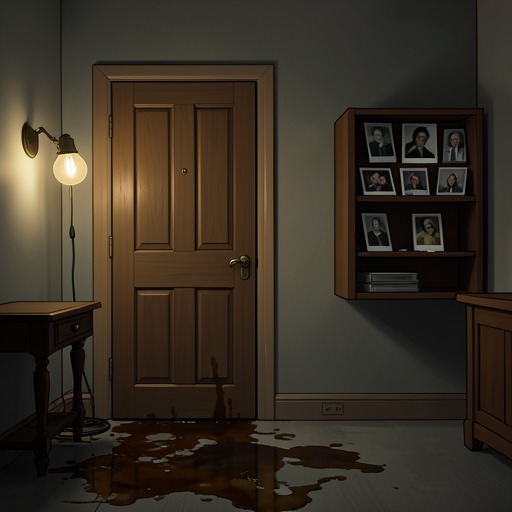
Dora Bunner describes a hall crowded with doors: the cloakroom and cloak cupboard, the dining-room, the drawing-room’s proper entrance, a china cupboard, a small flower room, and a side door. On the opposite side is the door Craddock had been trying to open. Its proximity to the drawing-room’s proper door makes it easy to mistake one for the other; Dora says she herself has often tried the wrong door. The hall table once stood against this one, and a thin horizontal mark remains across its panels. Her account supplies an ordinary domestic history for the door while drawing attention to its position and to how recently the furniture was moved.
Dora explains that the door is not a dummy but the entrance to a small drawing-room, made unnecessary when that room and the larger drawing-room were joined. It was supposedly fastened shut and, as Dora understands it, locked and bolted. She believes it has not been opened for years—indeed, not since she has been at Little Paddocks. The contrast between this confidence and the door’s actual condition turns a neglected piece of household architecture into evidence.
Craddock Tests the Lock
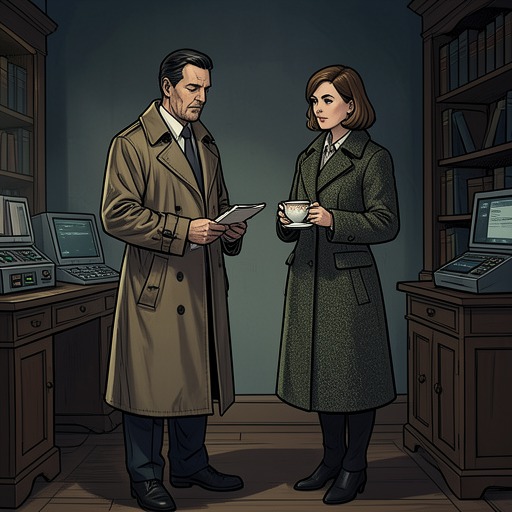
Craddock checks Dora’s account rather than taking the door’s appearance as proof. He sees the bolt at the top and tries it; it slides back with suspicious ease. Dora says that the key is probably among the many kept in the hall drawer. There, among a rusty assortment pushed far to the back, Craddock selects a key that looks different from the others. It fits and turns easily, and the door opens noiselessly.
Dora warns him to be careful because something might be resting against the door inside. Her alarm is consistent with the household belief that the entrance has stayed shut, but it does not explain the effortless bolt, the working key, or the silent movement of the door. Craddock identifies the decisive physical signs: the lock and hinges have been oiled. He tells Dora that the door was opened quite recently and resolves to find out who opened it.
A New Route Through the Murder
The concealed door changes the practical reconstruction of the shooting at Little Paddocks. Craddock explains to Letitia Blacklock that when the lights went out, anyone in the drawing-room could have used the door to come up behind Rudi Scherz and fire at her. In the confusion, people moved, exclaimed, and bumped into one another; afterward, the blinding electric torch was the only thing visible. The door therefore offers a route that would not require the assailant to cross the room openly during the blackout.
The discovery shifts the question from whether an outsider could have entered to whether someone already present used the hidden exit and return. Craddock’s thought is that the unknown person was not outside but in the house, and in the drawing-room that night. The door does not by itself name the attacker, but it supplies a concrete means by which the shooting could have been carried out without being seen or heard.
The Investigation Turns Inward
Letitia grasps that the door alters the case: no one, she says, had any right to meddle with it, and she knew of no one who had. She is disturbed by the possibility that one of her apparently ordinary neighbours tried to murder her, and asks why. Craddock answers that he has a feeling she must know the answer. The concealed door thus does more than revise the movement possible during the blackout; it makes the identity and motive of someone within the household circle central to the inquiry.
The revelation is built from details already embedded in ordinary domestic conversation: a table’s former position, a row of confusing doors, a drawer of old keys, and a supposedly unused entrance. Dora’s loquacity gives Craddock the information without making her account seem like a deliberate clue. His examination then converts those incidental details into a physical test. The contrast between the door’s neglected reputation and its oiled, noiseless operation marks a clear reversal: what the household treats as sealed is, in fact, a usable passage, and the apparent limits of the drawing-room no longer hold.